
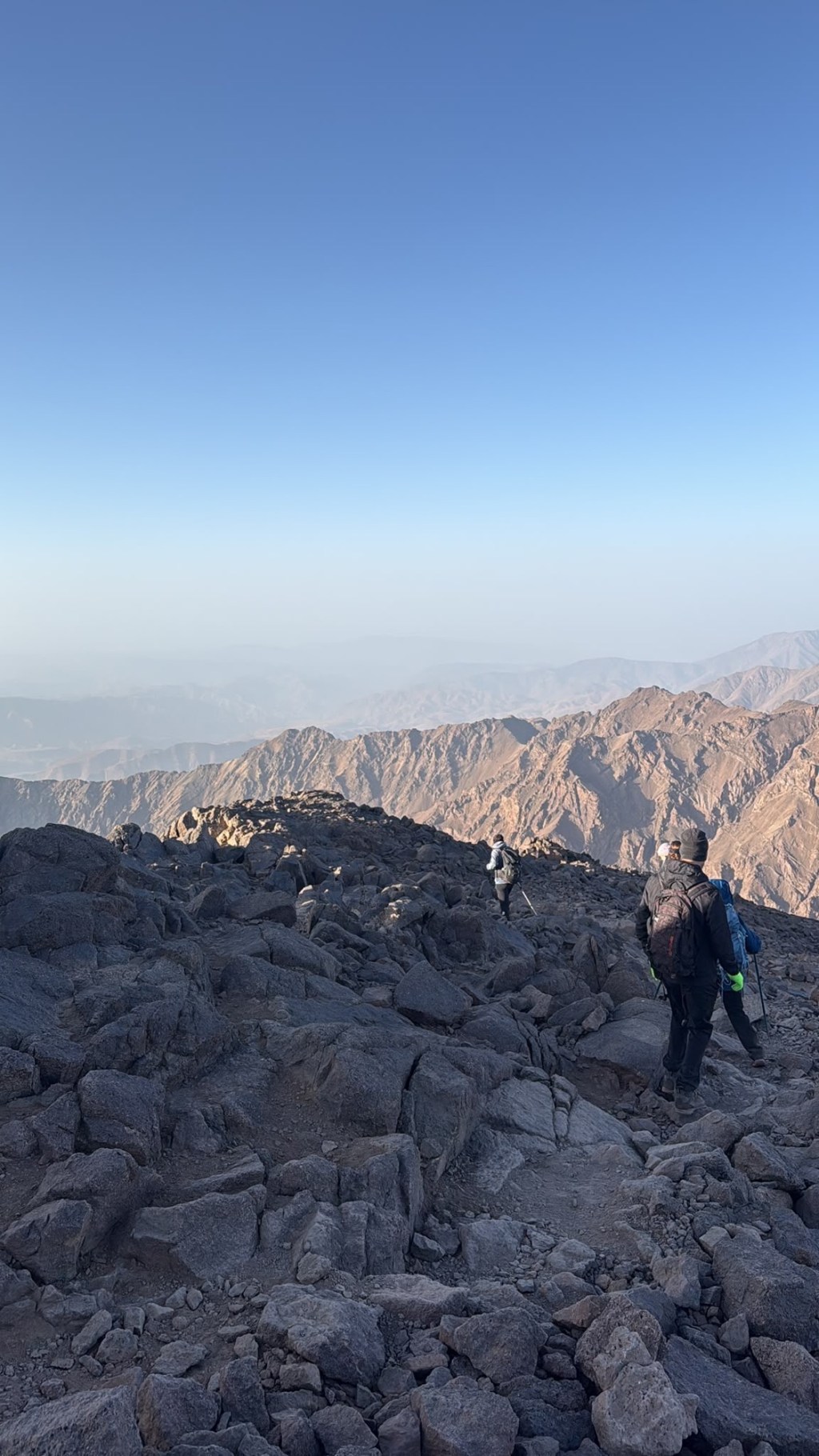
Mount Toubkal stands at 4,167 meters. It is often listed as one of the 4,000+ meter peaks ideal for beginners at mountaineering. Having completed the trek, I would agree that although it is a hike, it certainly touches the lowest edges of what could be considered “real” mountaineering. I say this because the route requires no technical ability, but the altitude combines with rocky, slippery terrain to add to the challenge. It also involves a small amount of unexposed, easy scrambling towards the end. I booked onto completing it within a weekend, but really it was completed within 24 hours of starting the trek.
You begin at Imlil with the late afternoon heat hovering at about 30 degrees Celsius. The hiking is straightforward but rather steep. You eat traditional Moroccan dishes including couscous, bread, cheese, and mixed vegetables on your breaks. We were warned not to have the orange juice sold at the stalls no matter how enticing it may be in the heat (they’re known to often cause some serious D&V)! You then reach the refuge at 3,207 meters late in the afternoon. You get a few hours rest before dinner. As I did on the Inca trail, I braved a freezing cold shower to feel at least a little fresher before the summit push in the morning. After dinner, we begrudgingly agreed for a 2 AM wake up call to start the summit push at 3 AM.
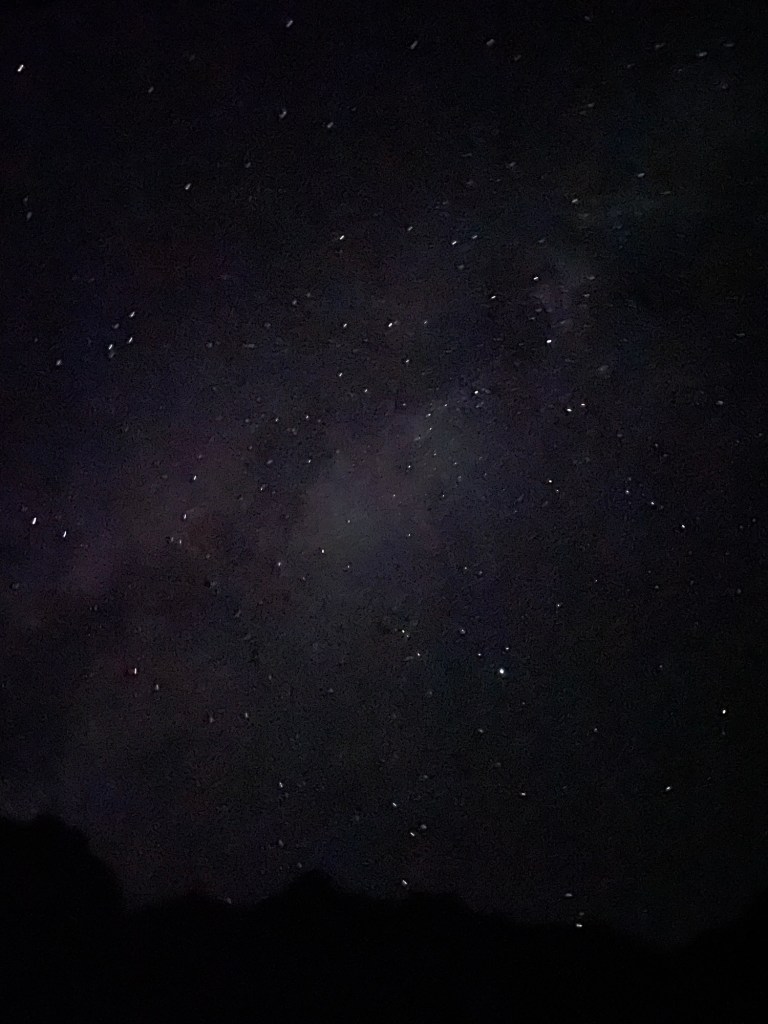
At night, the skies were clear and the milky way was clearly visible. Shooting stars streaked across the black tapestry. As you get back onto the trail, you could see the steep climb ahead by the headlights of the people madder than us who started the ascent even earlier. The lights snaked up along the mountain. We got our own headlights on, joining in at the tail end.
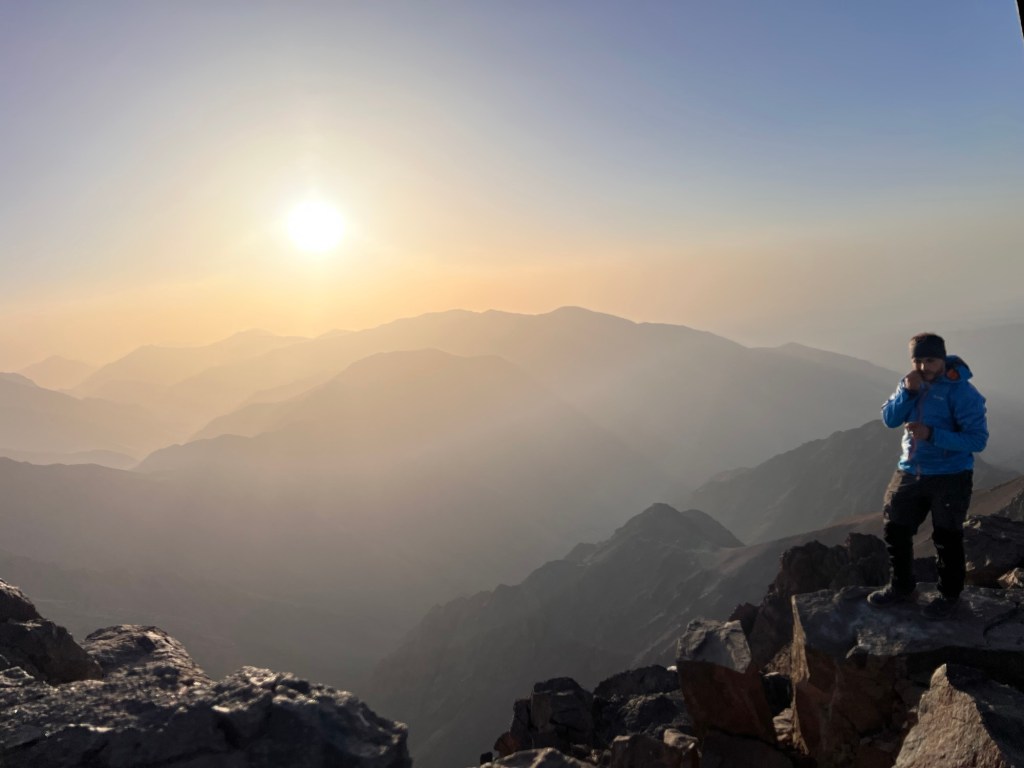
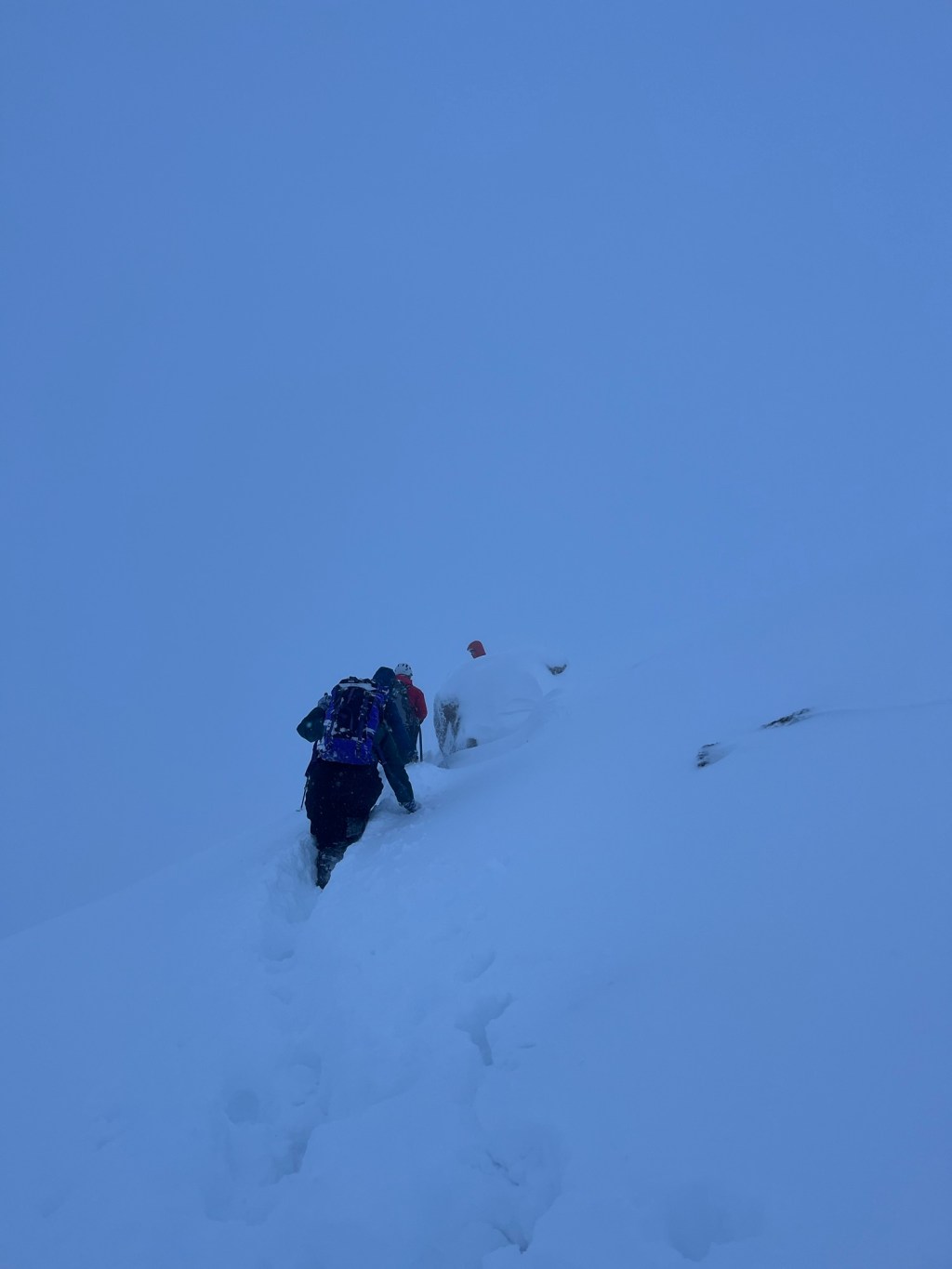
It was all fine going for me up until a few hundred meters from the summit. The scree was relentless and the altitude made breathing much harder. I just really wanted to get to the top and started to feel frustrated with how slowly I was moving along the rocks that slipped underneath my feet. We arrived at the summit just after sunrise and enjoyed stunning views of the Atlas mountains all around us. The views reminded me of the Jordanian mountains around Petra – rugged, barren, and desolate.
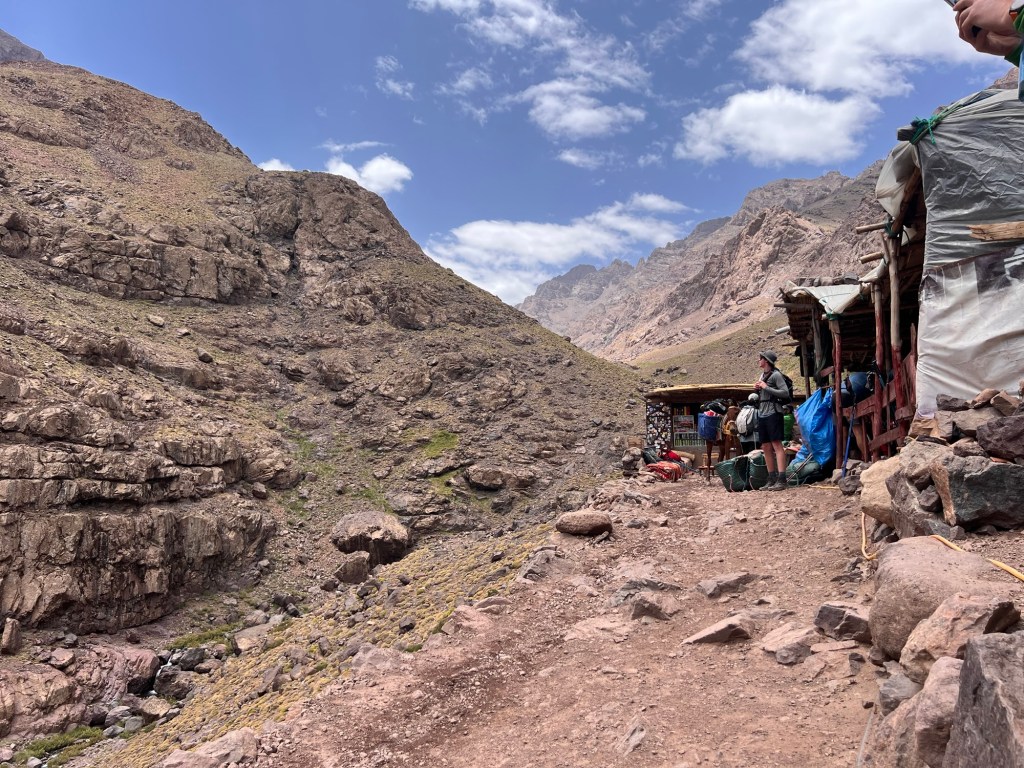
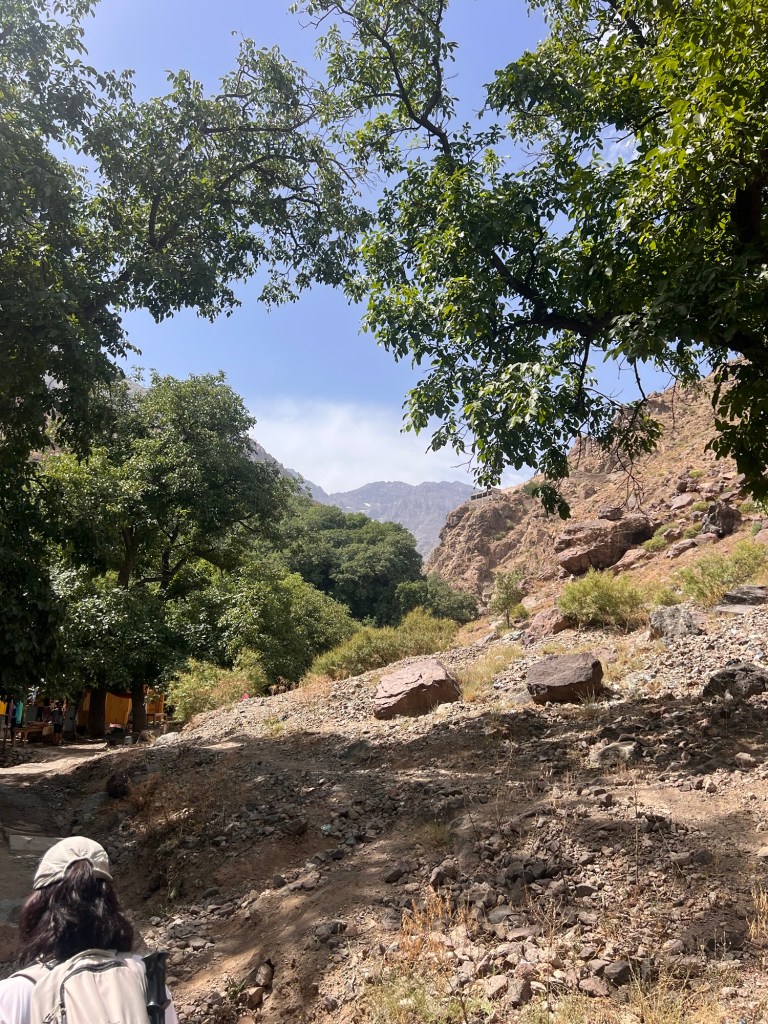
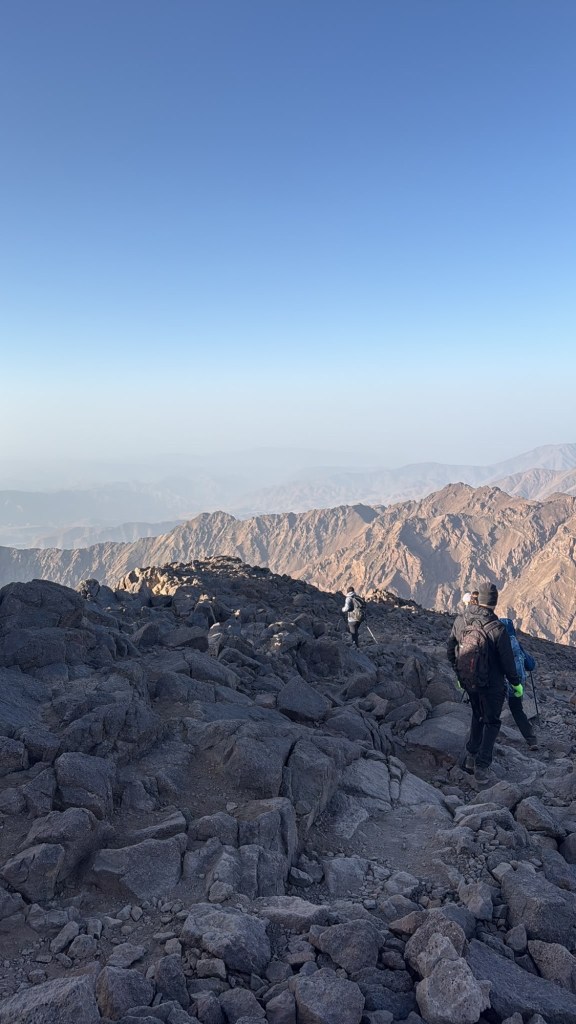
The descent was long and frankly arduous. We had rest at the refuge for lunch before finishing off the hike. I was exhausted but loved the trip and knew it was time to face Marrakesh’s markets.
With all respect to Morocco and its culture, Marrakesh gets 0/5 stars from me. I understand why people may enjoy visiting it, seeing all the goods sold in the makeshift stalls around the markets. Walking through the streets leave you feeling as though you have travelled back in time (this is only half a compliment). They wind through the city and you must keep your wits about you to dodge and keep yourself safe from mopeds scurtling down with speed (I was not good at this). It’s hard to keep your wits about you, though, as shop sellers keep trying to grab your attention and get their foot in the door to have you check out their wares. Their haggle was my hassle, though, and I am not the type to enjoy constantly having my guard up. I do think having a bit of an RBF and being able to speak Arabic did come in handy with having the confidence to manage the markets, but it surprised me how different the Arabic in Morocco is from where I grew up in the Gulf.
Language in Morocco
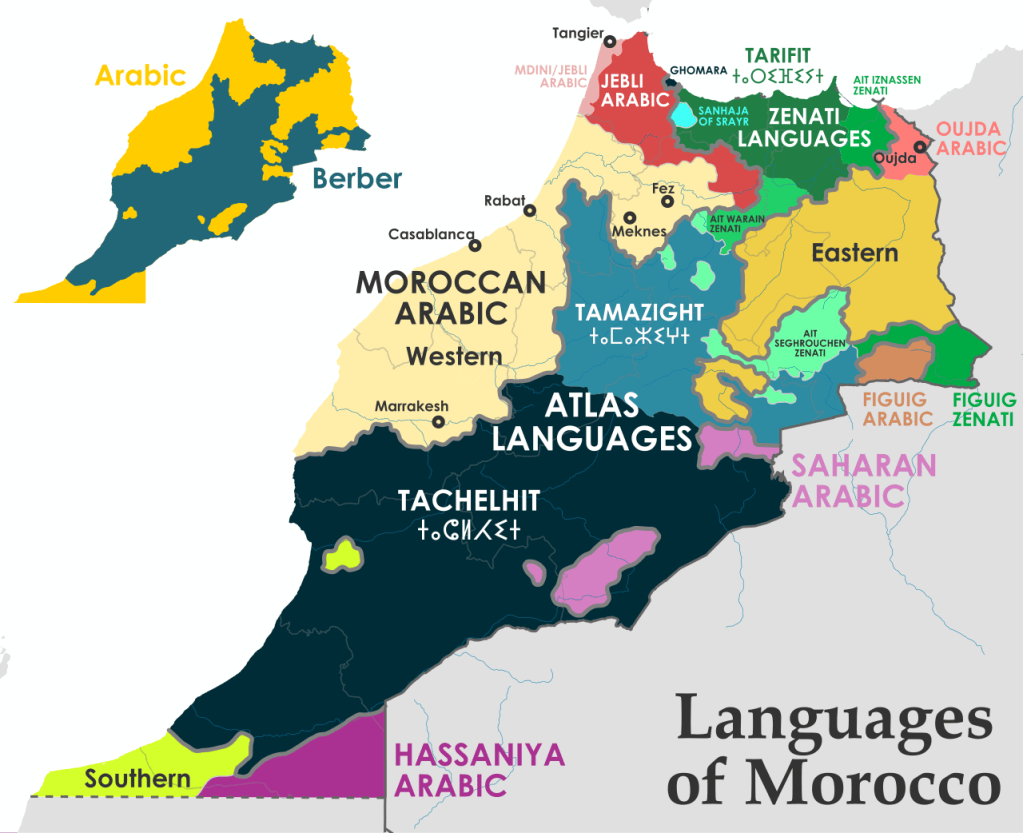
On arrival at Marrakesh, we learned from our cab driver that Morocco has three main languages. The most commonly spoken one is Moroccan Arabic called Darija. Modern standard Arabic is used for official government communications and paperwork, but Darija is the everyday spoken language in the media, the markets, and at home. It is a mixture of Arabic, Amazigh (the Berber language), French, and Spanish, and I found it near impossible to understand most of what was said. French is the unofficial second language used widely in commerce, whilst some sections of the population speak Amazigh, particularly in the towns around the Atlas mountains.
At one point, we came across two Spanish women who appeared very frightened. They said they were being stalked by a Moroccan man through the streets. As we stuck around and chatted to them, their faces eventually softened as a man walked past us and in hushed, relieved voices told us he finally left. It made the walk back to our hotel at night just that bit more eerie and solidified my thoughts that Marrakesh is not somewhere I will rush back to visit.
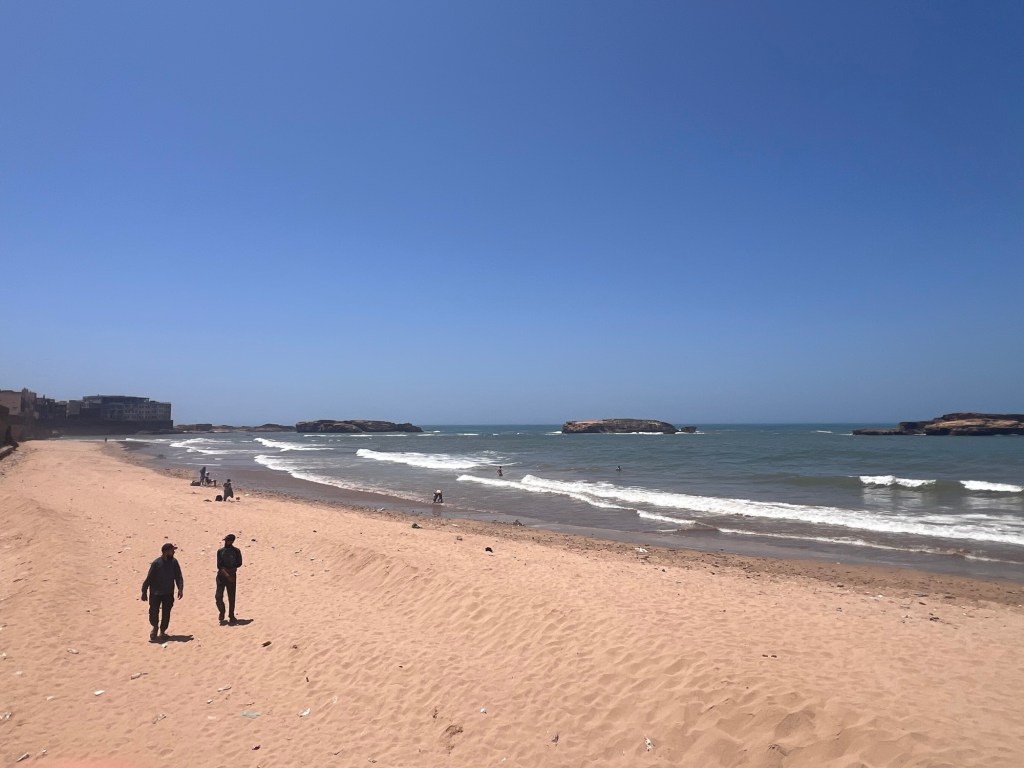
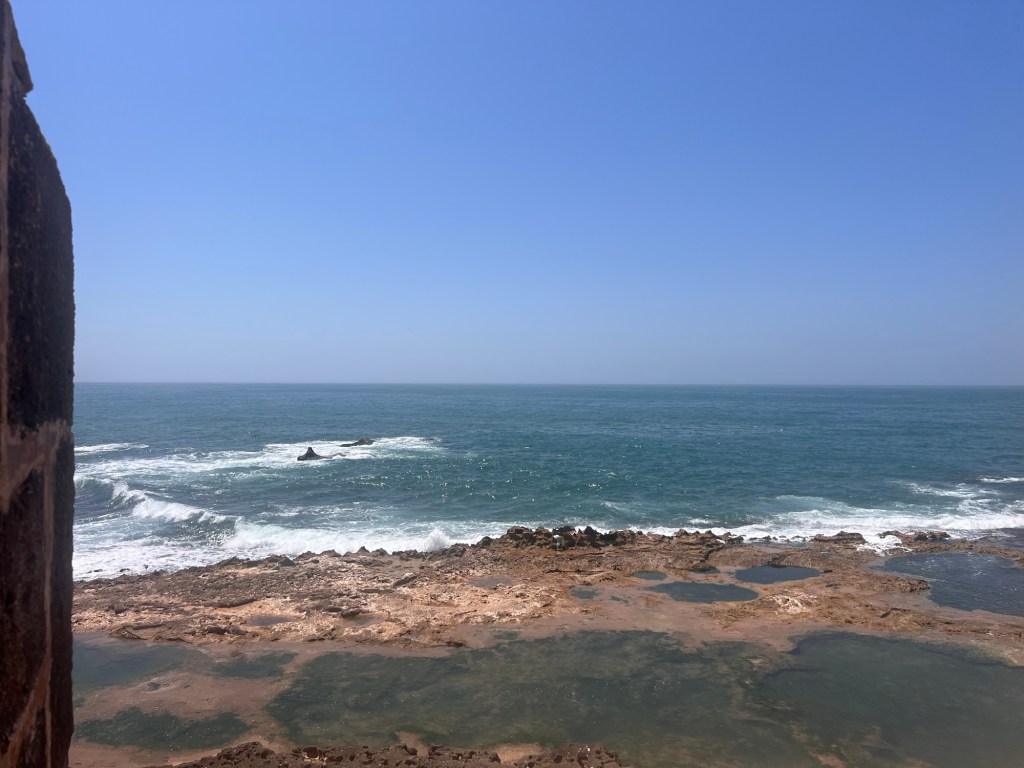
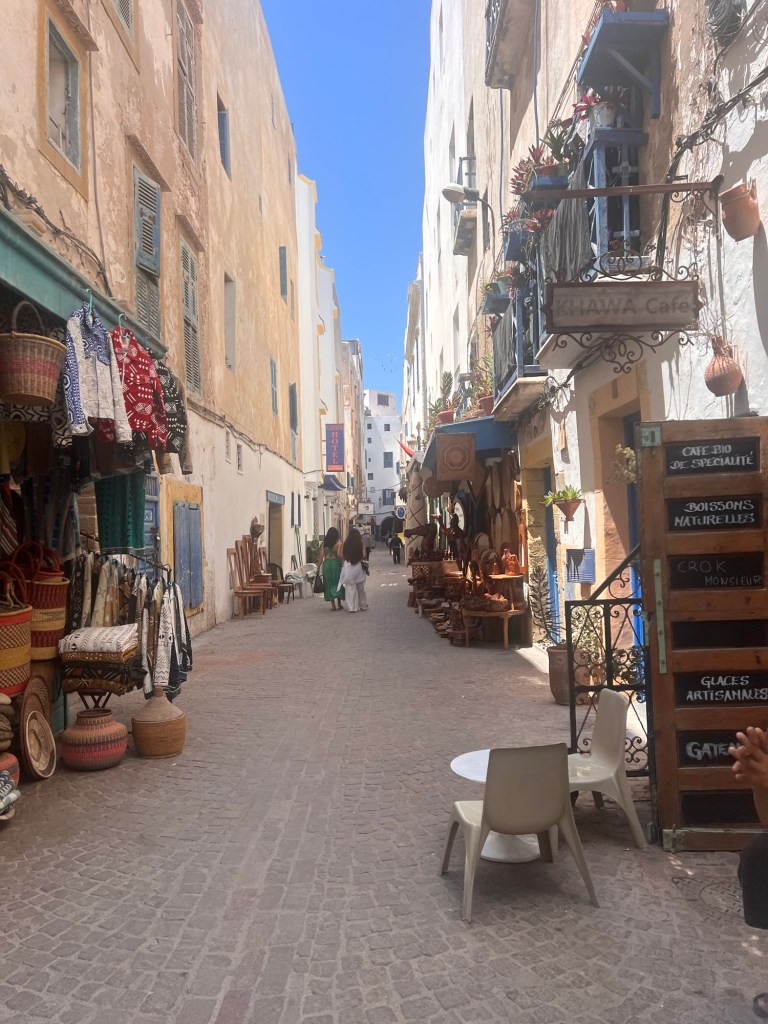
We took a day trip to Essaouira, a coastal city a few hours drive from Marrakesh. The markets there sold some of the same wares, but it was certainly less hectic than Marrakesh’s. There were some beautiful ceramics. The rustic pottery melded olive green bled through with bright reds reminiscent of those made in the Berber regions. An elderly shopkeeper invited us in to show the jewellery he handcrafted. He had a twinkle in his eye showing us the more esoteric pieces he crafted. We topped off the day trip with an excellent fish burger joined in by hungry cats looking at us longingly.
On the whole this was a fantastic trip, but if I were to do it again, I would largely avoid Marrakesh and perhaps use the time to explore other cities like Fes and Meknes. I also do want to see the Sahara and explore it on camelback! So who knows, a return to Morocco may be in the books…

 curiosity saved the cat
Leave a comment