
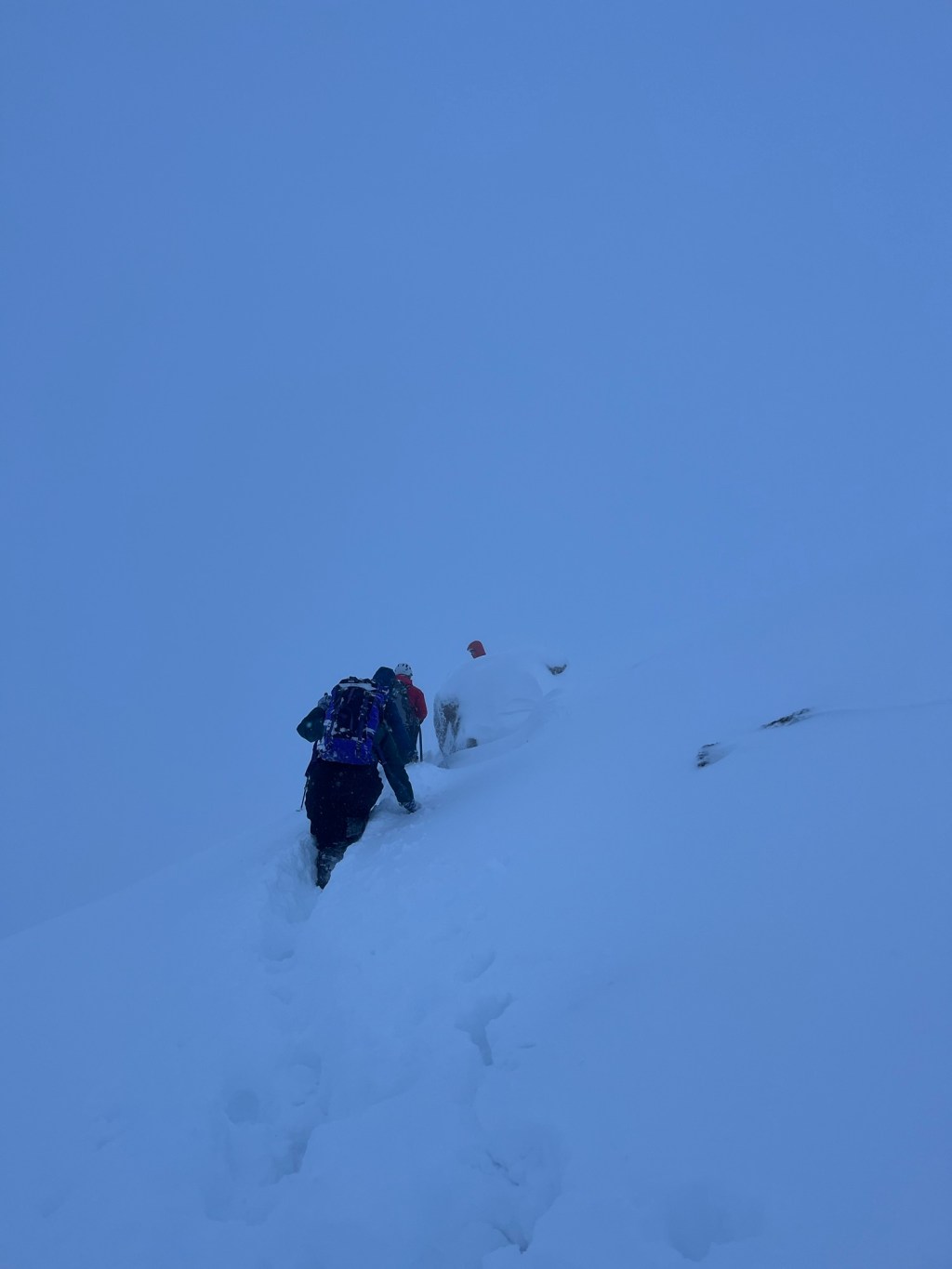
It’s often said that walking the Scottish hills during winter is never just walking, it is mountaineering.
I experienced what the Scottish weather is capable of on this second foray to Glenmore Lodge. Last year, I’d gone to learn the absolute basics of winter walking and this year I went for an introduction to winter mountaineering.
In both cases, the wind howled, the temperatures ranged from -10 to -15 degrees Celsius, and the snow was waist deep. We’d need to pop our walking poles on the snow horizontally and use them to drag ourselves out of holes we fell into. I grew up in the desert, so this felt like a wild experience for me both times!
I wanted to focus on my map reading skills and by the end I was starting to understand the basics of contour lines, compass use, and pacing. I definitely want to build on those basics, perhaps more so in the spring and summer where the land features are easier to spot. Learning this in the Scottish winter landscape is definitely doing it on hard mode.
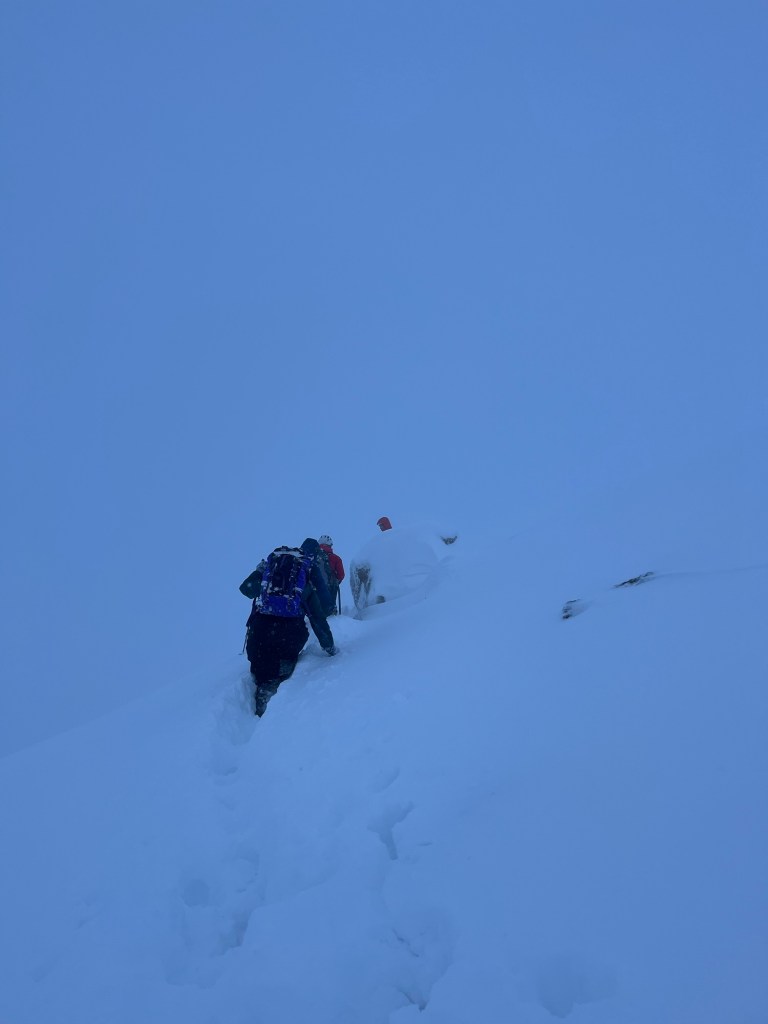
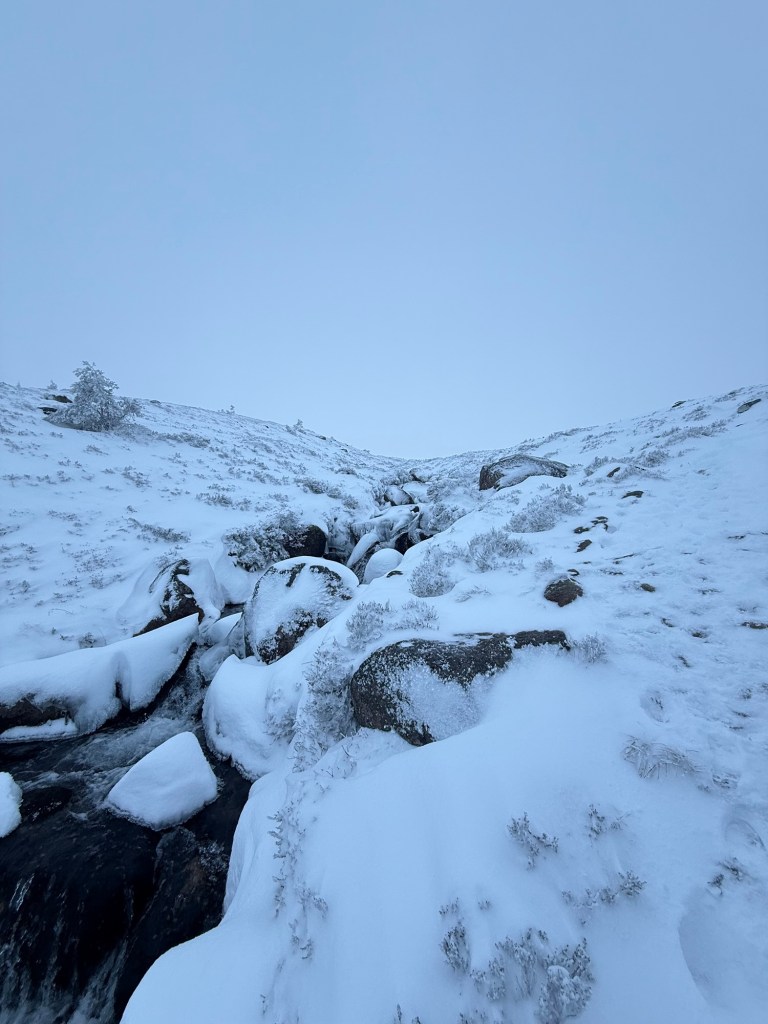
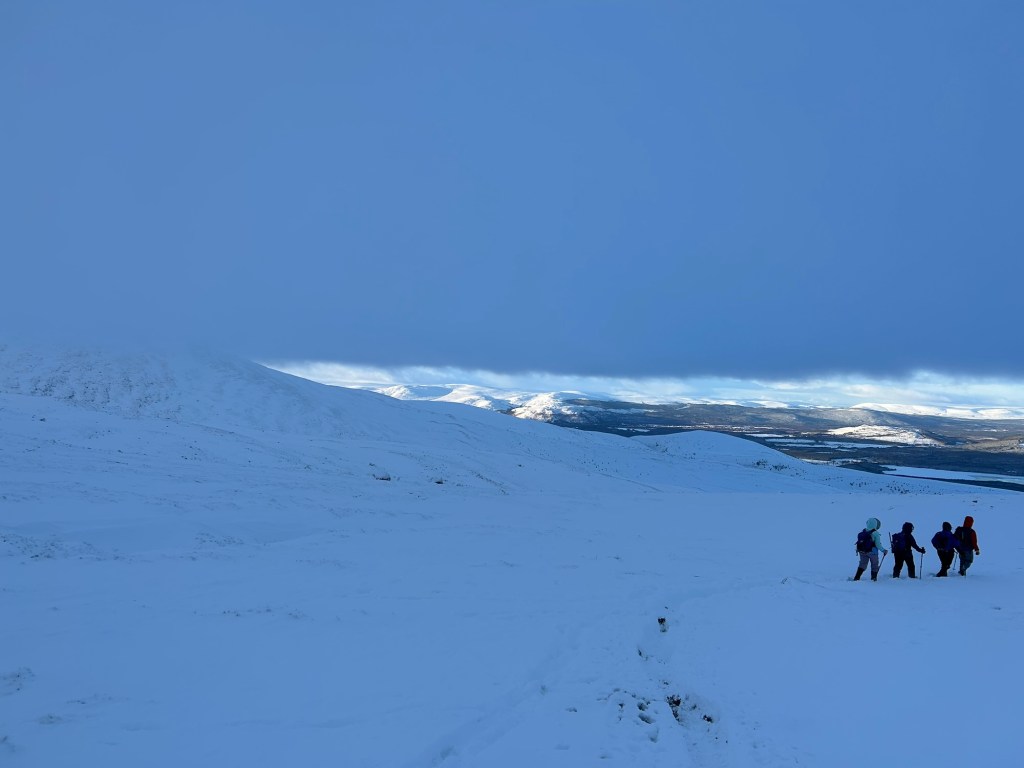
The main takeaway I had this year was how dangerous things can get – and how quickly that can happen. To preface this point: we were always kept incredibly safe with exceptional guidance. However, what felt like a beautiful, blue-sky day at the bottom of the hill became a bit of a nightmare as we neared the summit. Gusts whistled past us as we navigated the icy terrain and postholed repeatedly. I felt incredibly cold every time we paused our walk and shivered as we had our lunch. We warmed up quickly in a small shelter that protected us from the howling winds and it suddenly dawned on me: if I had twisted my ankle in one of those many post holes and we didn’t have a shelter, this could easily go from a fun day out to a disaster.
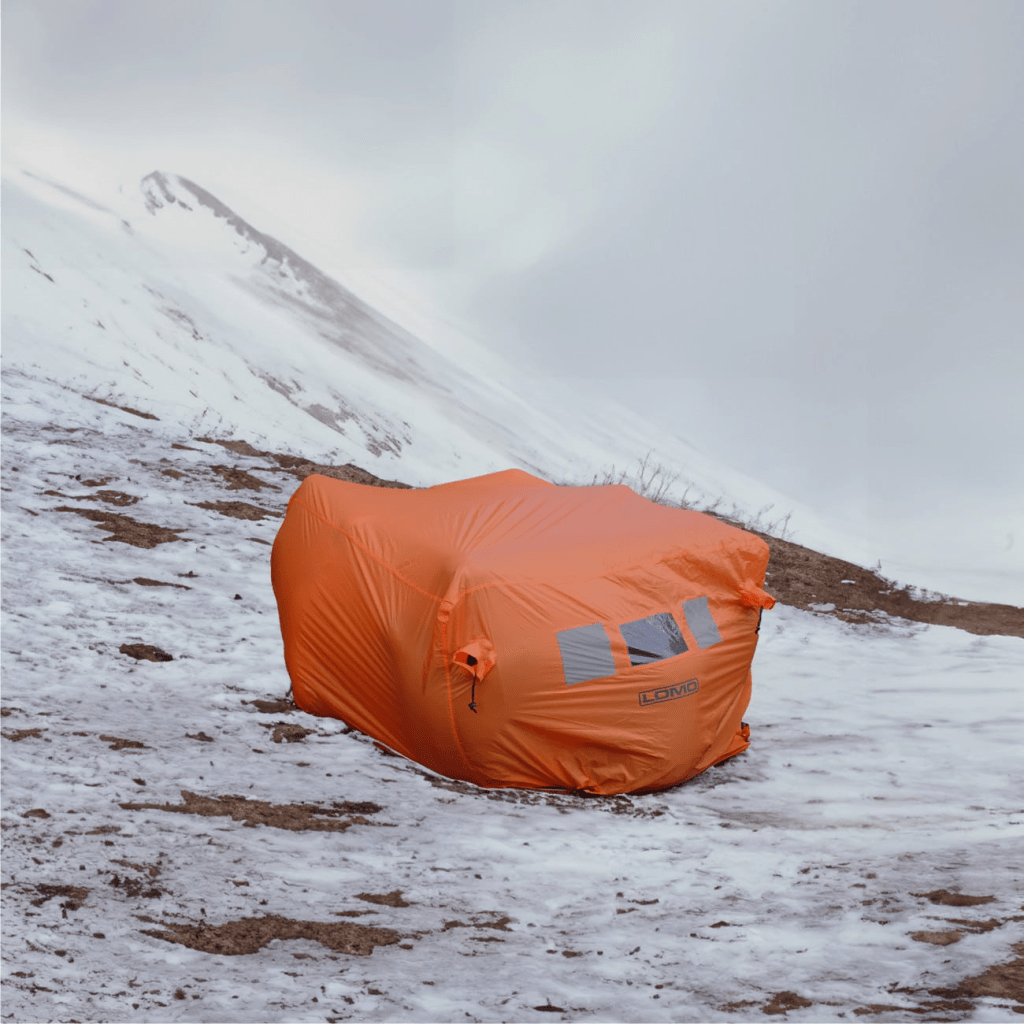
Image from: https://www.lomo.co.uk/products/emergency-storm-shelter-8-person-group-shelter/?srsltid=AfmBOoqkOMdI9qxqQ_cw9ye2Vn4jhprGAfqWUAq8xNZK3GH223wAOzB-
It became very easy to see how hypothermia could set in quickly even with all my layers and gear.
What is hypothermia?
It is the drop in your body’s core temperature below 35 degrees Celsius. Symptoms of mild hypothermia include what we can term a “sympathetic response” – a fast heart rate, a high blood pressure, a high respiratory rate, shivering, and vasoconstriction. This is all done in an attempt to conserve heat.
As hypothermia progresses, you start to become confused and those compensatory mechanisms begin to fail you. Your heart rate drops as do your blood pressure and respiratory rate. In about 20-50% of people with hypothermia, they may begin to paradoxically undress. They become agitated and combative and discard their clothing, which aggravates the heat loss. This is thought to be due to a dysfunction of the hypothalamus, a part of the brain that normally regulates temperature.
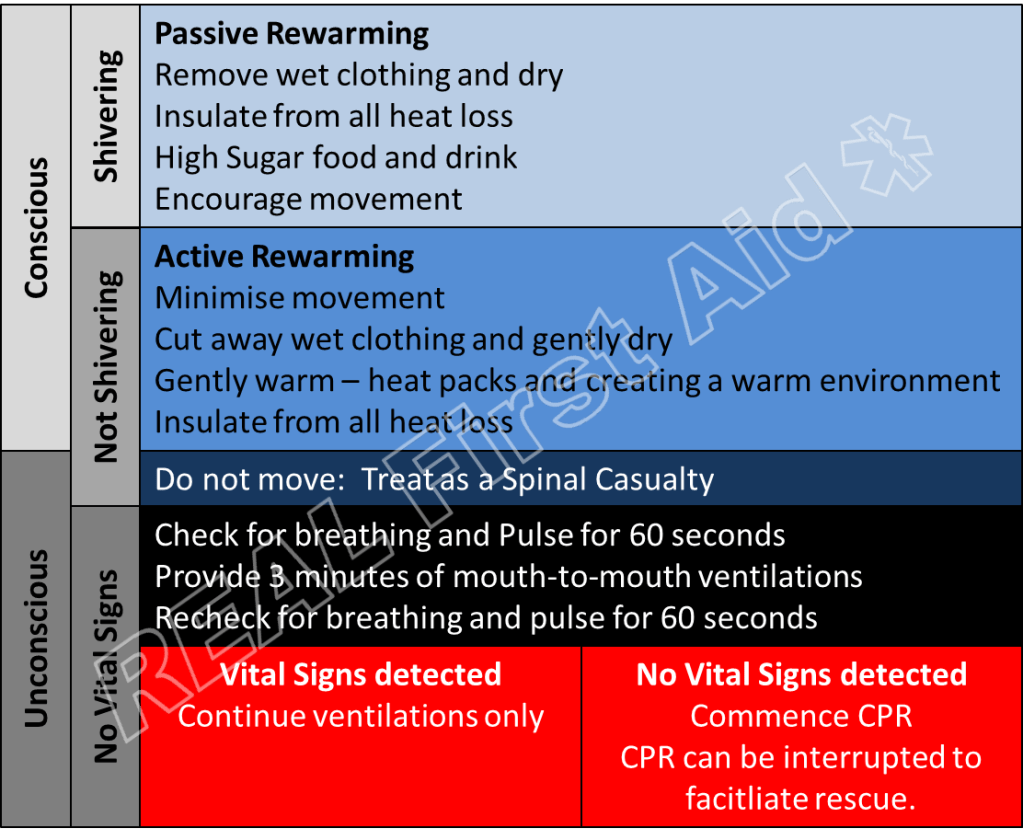
Learning about this in the lecture afterwards reinforced the importance of preparing adequately for Scottish winters and over-preparation is always better than under.
Considering what I went through on Kilimanjaro (definitely was hypothermic there by the end!), I’ll be buying a proper warm base layer for my lower body and a new pair of mountaineering gloves. This will help me achieve one of my goals for the year, which is to get another 4,000 + meter trek under my belt.
Stay safe out there and enjoy all that the outdoors has to offer – especially the beauty this time of year brings!
 curiosity saved the cat
Leave a comment