TW: Grief, discussions of death
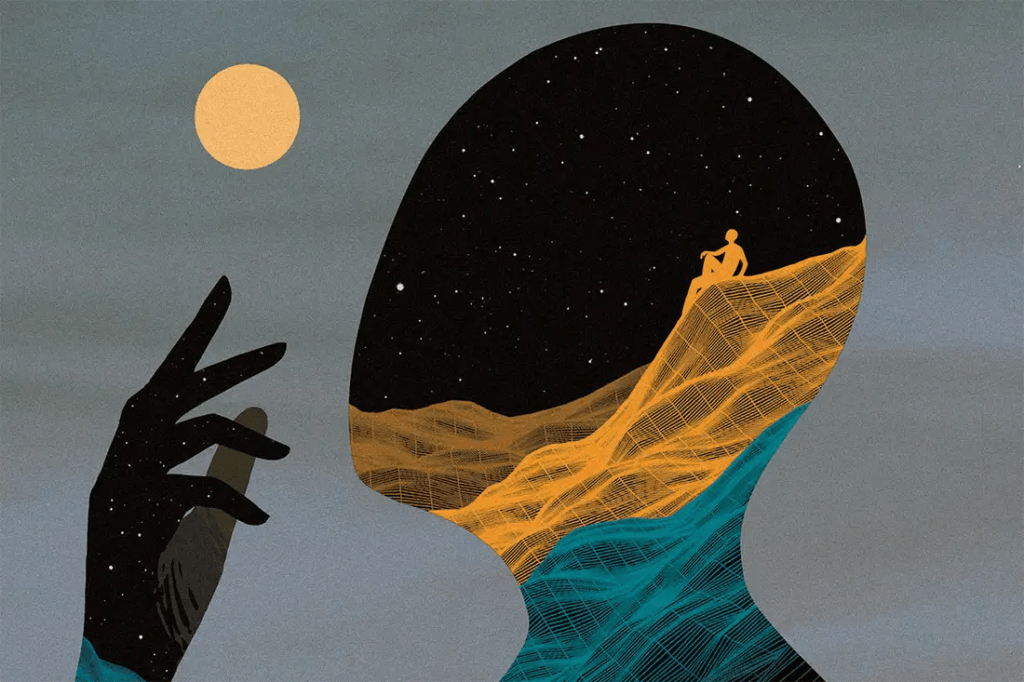
Recently, I died – and so did someone I loved very much.
I merely visualised the death of my sense of self. I saw her start to disintegrate into particles of light, each component then reintegrated into a newer sense of self gaining in strength. The patterning that represented me served its function and now it was time to go and leave me with the lessons I needed to navigate my future, one brighter than what came before. I was convinced this was merely a symbolic representation of an “Internal Family System,” then weeks later she died.
Alice was one of the loves of my life. Despite our tangled relationship at the end, I loved her immensely. We hadn’t spoken much for ten months, but I still thought of her every day and wanted to see her grow, have her deams come to fruition, and maybe one day meet again and continue our dance through life. Those dreams died with her that day in Switzerland. My beautiful friend was snuffed out by one of the world’s most beautiful canyons. I was shocked to begin with, unable to operate. I was sweapt away with her. As the experience integrated within me, I became deeply motivated to examine what consciousness and death really mean.
Despite working in anaesthetics and intensive care, I expend immense effort to avoid thinking of these topics too deeply. I suppress people’s consciousness to get them through the most painful experiences of their life every day, but the ethereal nature of consciousness could not integrate within my supposed scientific mindset; thereby, I played with consciousness unconsciously. I watched people die and noted how I could feel when someone was “still around” and “not,” but detached myself to what death might mean. It left me lifeless, because I was surrounded by death and never thought what it means to really live.
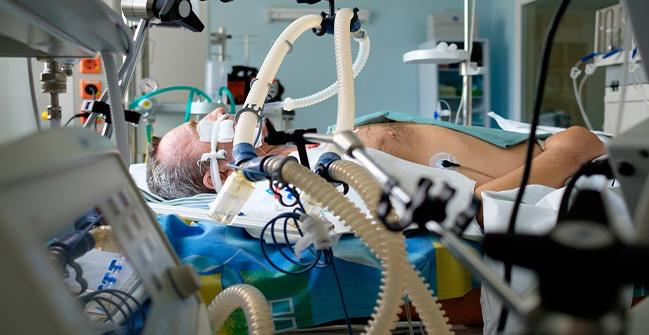
Alice and I were experts at avoidance – picking career paths where death surrounded us yet finding increasingly creative ways to face away from ourselves and others. But death, my symbolic one and her literal one, forced my mind’s eye onto what I’ve avoided.
Now that Alice’s body was gone, where did she go? I always believed that once you died, you merely went into eternal blackness. Consciousness must be an emergent property of the brain, a result of its electrical firing, and once that firing ceases, you cease to exist. Eternal darkness.But that is a belief – and I have no evidence that belief is true. It is a spiritual belief that wears scientific robes, an emperor with new clothes. There is an evidence base that is growing that consciousness may not be an emergent property – that in fact, our brains are a filter or a kind of “antenna” for consciousness.
I have been reminded of Thomas Kuhn’s The Theory of Scientific Revolutions. In the physical sciences, we formulate a theory that matches the current data-set. As we continue to gather new evidence, we sometimes gather data that do not fit the current paradigm. Rather than question the paradigm, we find ways to force the data under the umbrella, even if that data must be twisted and shoved into place. It is only when there is a paradigmatic shift, a new theory, that fits the old and new data that science can continue – by shifting perspective, you can ask the right questions to gain the right answers to broaden your understanding. Fascinatingly, this intellectual tendency has an echo in the business world with disruptive vs. sustaining innovation as documented in Clayton Christensen’s book The Innovator’s Dilemma.If keen to learn more about my thoughts on that, read my AI blog post.
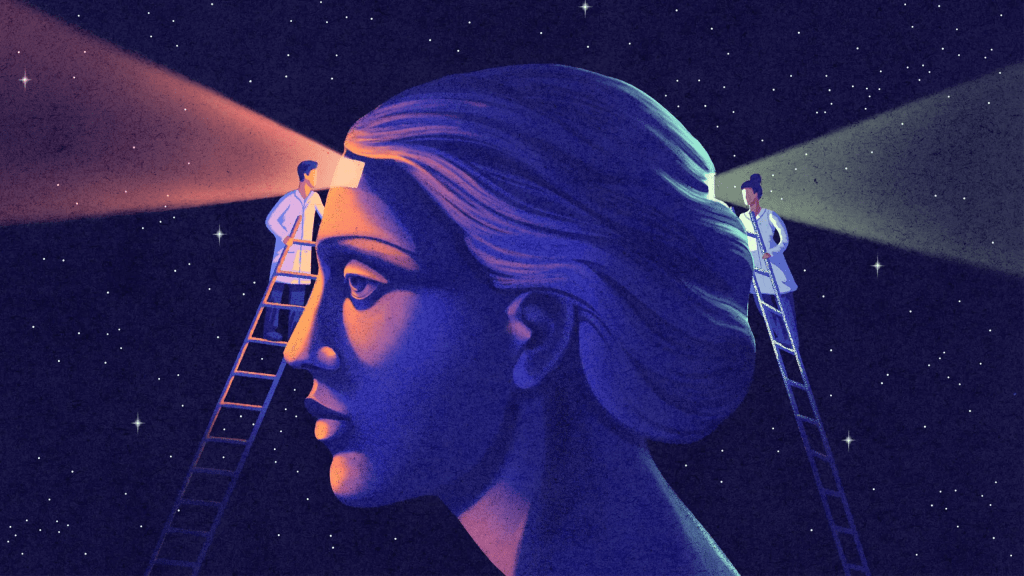
Near death experiences, or most recently known as recalled experiences of death, describe what 10-20% of people who have died and subsequently been revived recall of the experience of dying. Dr. Bruce Greyson and Dr. Peter Fenwick (amongst many others) have done some phenomenal work in the area. All of those who have experienced this recall an experience of light or an overwhelming feeling of being seen, held, and loved. Some see their own death from a different vantage point, explore faraway places, recognise that time is nonexistent, see loved ones who have died who then guide them in this realm, and are given a life review. It sounds mystical and “non-scientific.” The eeriest part of it all is how common this experience is and how those commonalities exist regardless of age, gender, culture, or awareness of others’ recalled experiences of death. This can even happen under anaesthesia (!) and at times the stories can be corroborated when the person recalls what occurred at the time of their death (even in other parts of a house or hospital). The ones under anaesthesia fascinate me the most. They seem to only recall the parts of an operation where they died and then return to anaesthesia once revived to wake up in the recovery room.
The advance of medicine makes these experiences more common. We bring people back from death more often, delaying the irreversible, leaving a body for someone’s consciousness to return to. We are creating AI systems that hold the potential to develop consciousness, which will likely shake our understanding of what consciousness means. I sense this is one of the most pressing questions of the near future. We have asked these questions since the dawn of humanity, but we now have the capacity to really start understanding it. We have the tools to investigate the circumstances surrounding death with greater clarity. Perhaps one day we can uncover the driver of these mechanisms.
I have wondered if this was my own wishful thinking. However, motivation is not delusion. Motivated inquiry remains inquiry. And I have started to wonder how the dissolution of my own self is eerily similar to that described by those who have actually died – the light, the components that dissolve to become reintegrated, the need for the dying self to be fully seen and loved, and a review of the memories it experienced, both good and bad. There is also a recognition that my old self is never really gone and an echo of her will always exist within me. Perhaps this is a universal experience of an egoic self that gets ready to take on new form and return to a more collective consciousness.
In Mary C. Neal’s near death experience whilst kayaking in South America, she was informed of the death of her son 10 years before it occurred. When she asked her guides why he would die, she was informed that “beauty comes of all things.” It is hard to see the beauty of something so tragic. But we do not yet understand the basics. All I can do in my limited understanding is to accept this adage and find some sense of purpose in letting beauty come of this.
I miss you, Alice.

 curiosity saved the cat
Leave a comment