
I traveled up to the Scottish Highlands in the Cairngorms just before Christmas to experience proper winter conditions for the first time. Before this, I haven’t experienced “real” snow. I may have seen snow cover the roads in city centres for half a day before melting away, but I’d never really experienced enough to sink myself into, literally or metaphorically.
It was a 6 hour drive up from Leeds to get to Glenmore Lodge, an all-inclusive outdoor skills centre. The experience was phenomenal. The staff were friendly and everyone at the lodge were “my people,” curious, kind, fun, and excited to be outdoors and learn. The only worry I had driving up were the repeated “yellow weather” warning signs for gale force winds. I thought surely we would not be venturing far in these weather conditions.
We started our course indoors learning about the basics of weather checks. “Gale force winds up to 110 mph at the peaks,” “cyclonic,” and “severe caution advised.” We learned how the direction of the winds influenced avalanche conditions. Avalanches were no longer this mysterious force I thought always occurred in the “real mountains” like Everest and became more of an understandable part of nature.
The Science
Avalanches are a rapid flow of snow down a slope. Snowpacks, which are condensed portions of snow, may begin to slide when the underlying snow layers collapse. There are two main types of avalanches – sluff and slab. Sluff avalanches happen when the weak layer of snowpack is at the top, whereas slab avalanches occur when the weaker layers are lower down. As the snow hurtles downslope, it collects more snow to produce a mass that moves to speeds of up to 200 mph.
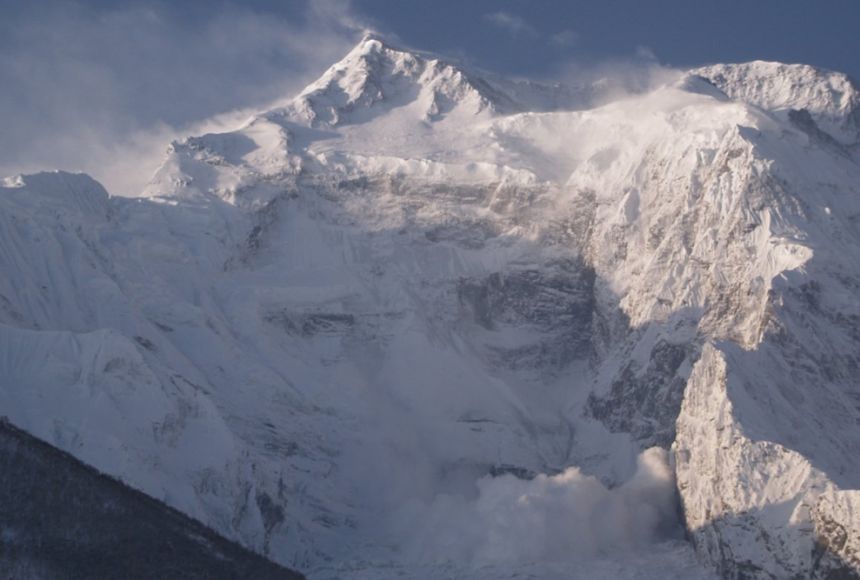
There are three factors to consider with avalanches
- Aspect
- Altitude
- Angle
The winds deposit snow on the opposite side of the mountain. This accumulation of snow is at risk of breaking off to become an avalanche. Say you have a north-westerly wind – the snow will deposit on the south-easterly aspect of the mountain. We visualised this on a smaller scale with the vegetation peeking out from the snow. The icicles and snow accumulated on one side of the vegetation, opposite to the wind’s direction. Knowing about the wind conditions gives you an awareness of the riskiest parts of the mountain.
If conditions are particularly bad, avalanches can occur sporadically, but human activity can trigger avalanches as well through movement and vibration, breaking off weaker snowpacks that start the process. The parts of the mountain most at risk have approximately 30 degrees of angulation. This is just enough to allow sufficient snow to accumulate but steep enough to permit the snow to accelerate to high enough speeds to result in an avalanche.
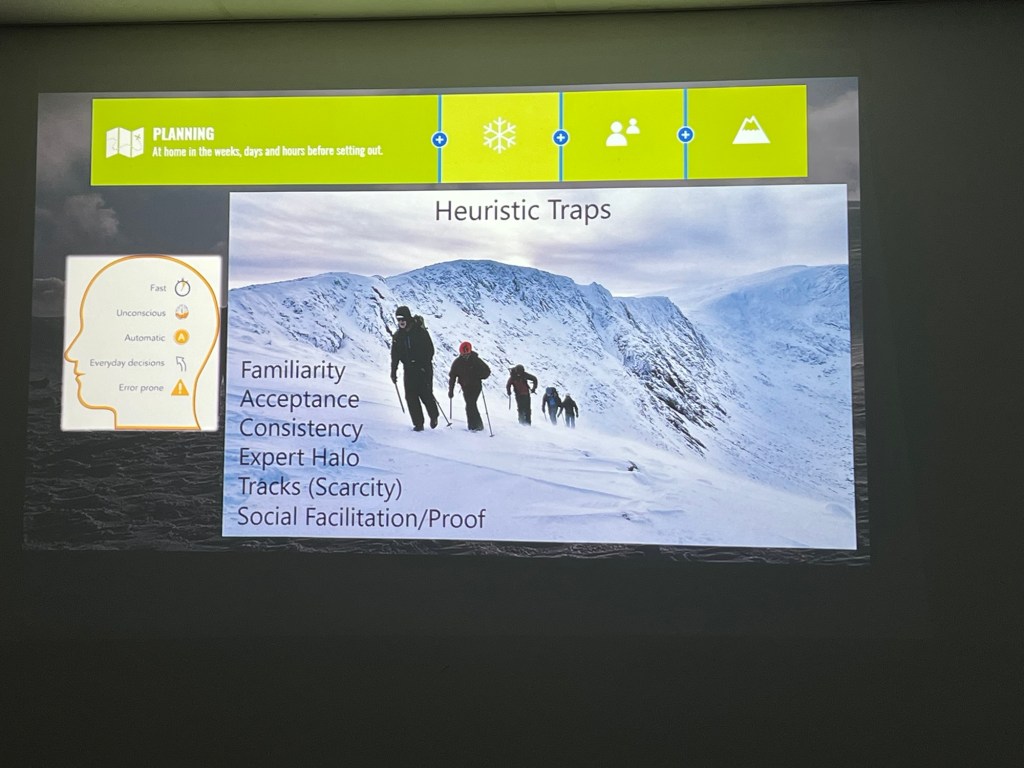
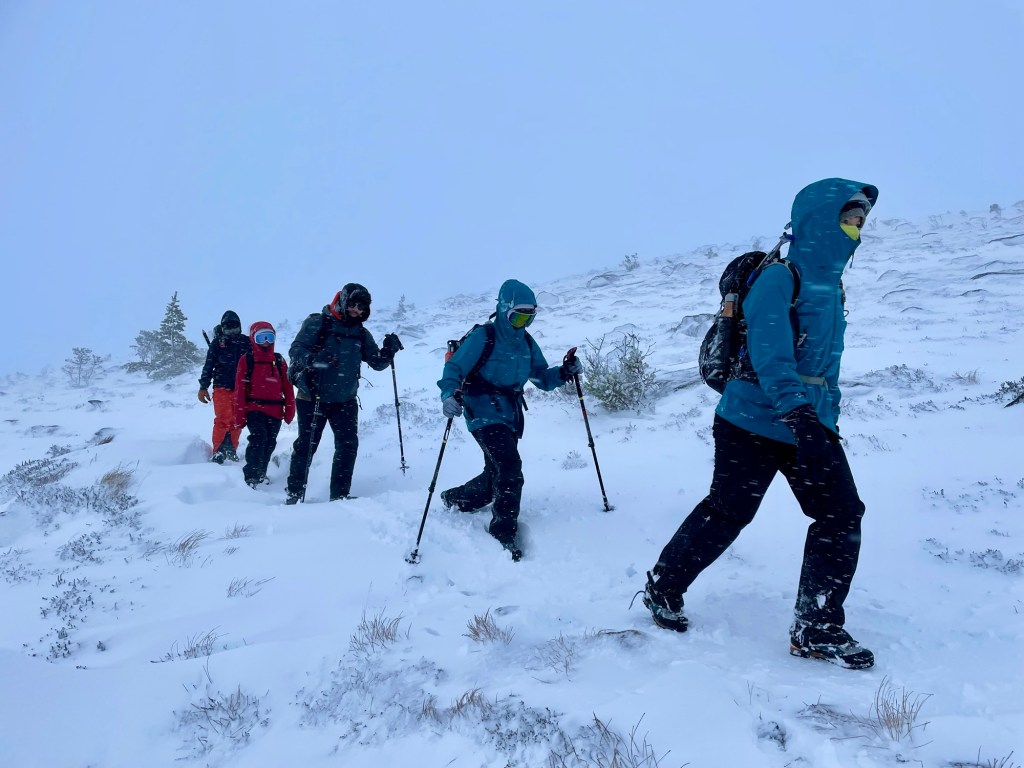
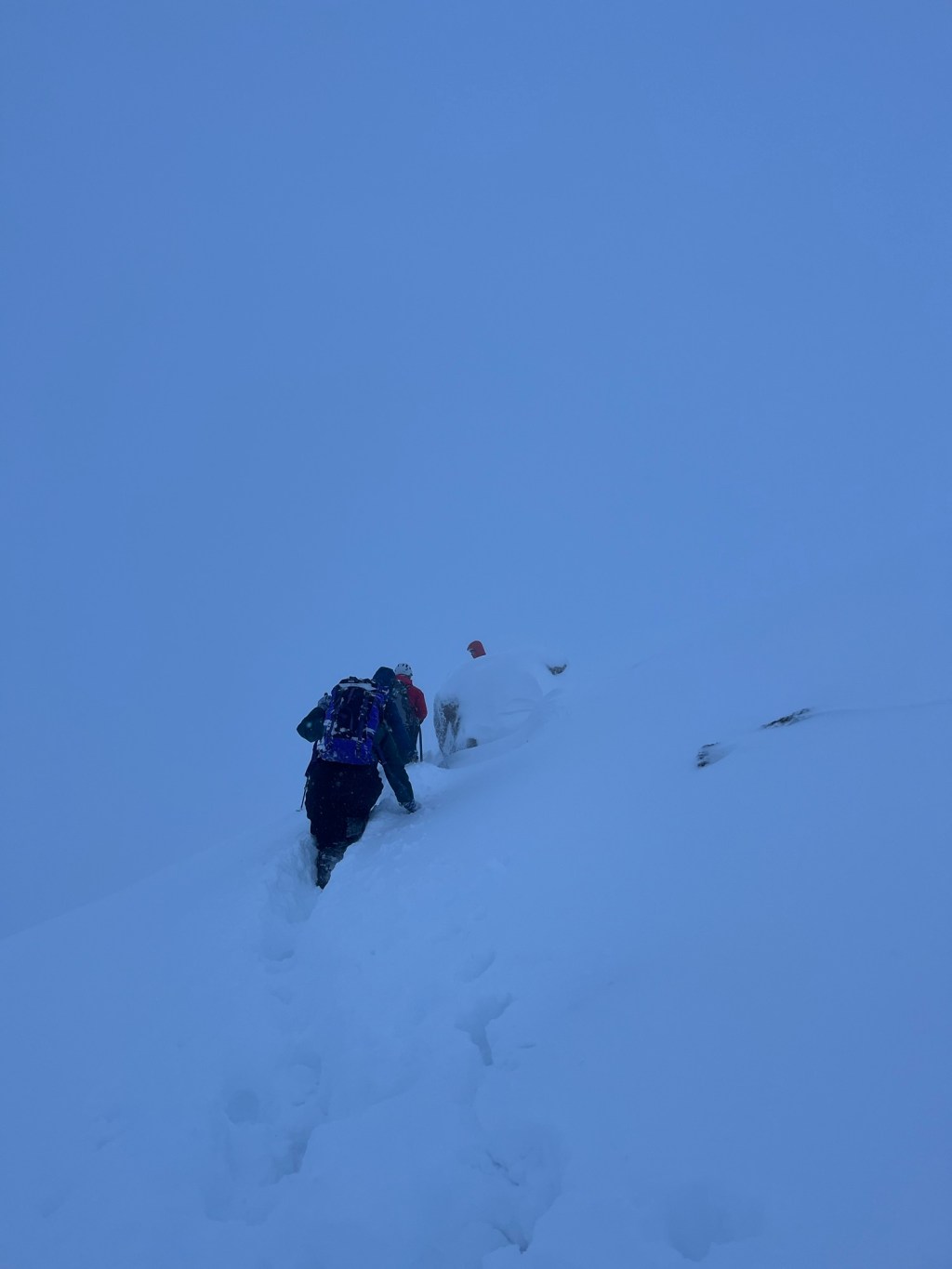
It was so much fun going on that adventure with a guide who kept us safe throughout. We learned how to pop our crampons on and practiced our ice axe arrests on a gentle slope. I really struggled with moving on ice. I am generally a slow and unconfident hiker when going downhill anyway – adding ice to the mix certainly did not make that easier for me. However, when I had my crampons on I felt I had superpowers and was so much more confident mobilising up and down icy hills.
The wildest part was certainly on the second day. We saw group after group descending from higher up the munro. They reported winds that had knocked them off their feet. We experienced those winds ourselves and decided to turn back, too, but had lunch in a shelter. The wind battered the uncomfortable shelter that 6 of us huddled within as we munched on our sandwiches. It really gave me an appreciation of what the Scottish winter can do and how easily conditions can leave you hypothermic if you are not equipped appropriately.
I highly recommend this course to anyone interested in doing some winter walking. I am planning to meet up with my university friend early March to hike up Ben Nevis with a guide and practice those winter skills – who knows, maybe even a friendly grade 1 gully to try out some winter climbing!
 curiosity saved the cat
Leave a comment